Zinkbromid/Lithiumbromid, typ. 25 %ige Lösung in Dibutylether
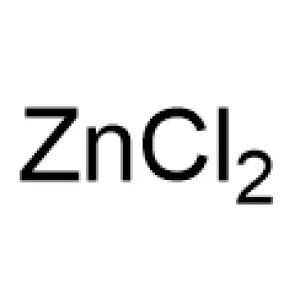
ZnBr2
Durch die Verwendung einer „fertigen“ Dibutylether-Lösung wird die Handhabung des sehr hygroskopischen und staubigen ZnBr₂- und LiBr-Pulvers vermieden.
Die ZnBr₂/LiBr-Dibutylether-Lösung wurde hauptsächlich für die Anwendung in der organischen Synthese entwickelt, z. B.:
- Transmetallierung von Organomagnesium- und Organolithiumverbindungen zu den entsprechenden Zinkreagenzien für C-C-Kupplungsreaktionen (Negishi-Protokoll)
- Bildung von Zinkenolaten durch Deprotonierung von Carbonylverbindungen mit Standardbasen und anschließender Transmetallierung mit ZnBr₂
- Katalyse von Cycloadditionsreaktionen, z. B. Diels-Alder-Reaktionen von elektronenreichen Dienen mit Carbonylverbindungen
- Herstellung von selektiven Reduktionsmitteln, z. B. Zn(BH₄)₂ durch Reaktion von NaBH₄ mit ZnBr₂
Referenz:
McGarvey, G.J. in Encyclopedia of Reagents for Organic Synthesis, Paquette, LA, Hrsg. John Wiley and Sons, New York (1995), Band 8, 5544
Legal Disclaimer
The information presented herein is believed to be accurate and reliable but is presented without guarantee or responsibility on the part of Albemarle Corporation and its subsidiaries and affiliates. It is the responsibility of the user to comply with all applicable laws and regulations and to provide for a safe workplace. The user should consider any health or safety hazards or information contained herein only as a guide and should take those precautions which are necessary or prudent to instruct employees and to develop work practice procedures in order to promote a safe work environment. Further, nothing contained herein shall be taken as an inducement or recommendation to manufacture or use any of the herein materials or processes in violation of existing or future patent.