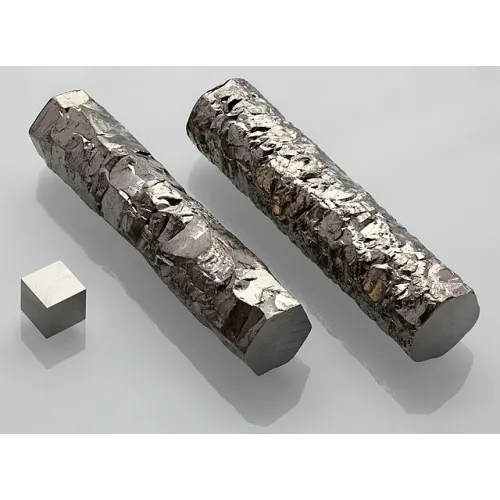
Zirconium Metal powder, Grade CA, wet, suspended in acetone
Zr
Zirconium Metal powder, Grade CA, wet, suspended in (CAS 7440-67-7, molecular formula Zr) is an inorganic chemical supplied as a technical-grade material. It is typically a dark grey suspension.
Zirconium powders find application in various pyrotechnic areas. They are a source of heat for squibs and ignition devices for a variety of uses including automotive airbag inflators. For the production of highly reactive and quick fuze compositions in pyrotechnics for use in ammunition, explosives, airbags and safety belt pretentioners. They are also used in manufacture of flash cubes, electronic tubes, as well as as alloying agent with other metals.
Typical specifications include: Zr total + Hf total min. 97.4 +/- 0.8 %; approx. 2 %; Ignition gain min. 31.5 +/- 1.0 %.
Highly flammable solid. Dust explosion hazard.
Applications
Zirconium powders find application in various pyrotechnic areas. They are a source of heat for squibs and ignition devices for a variety of uses including automotive airbag inflators. For the production of highly reactive and quick fuze compositions in pyrotechnics for use in ammunition, explosives, airbags and safety belt pretentioners. They are also used in manufacture of flash cubes, electronic tubes, as well as as alloying agent with other metals.
Specifications
- Zr total + Hf total min. 97.4 +/- 0.8 %
- Hf approx. 2 % (natural content)
- Ignition gain min. 31.5 +/- 1.0 %
- Burning rate 13 +/- 5 s/50 cm (Albemarle standard)
- Auto ignition temperature 180 +/- 20 °C
- Apparent density approx. 1.1 g/ccm
- Si max. 0.7 %
- H max. 0.2 %
Method of Analysis
Determination of ignition gain, particle size distribution, average particle size, specific surface area (BET), combustion properties, gravimetric analysis of zirconium, spectrometric determination of impurities. For specific information on our standard methods of testing see the special metals sales program.Handling Instructions
Highly flammable solid. Dust explosion hazard. An ultra-fine, high-grade zirconium powder which ignites very easily and burns extremely rapidly at white heat. Zirconium metal powder is fairly inert to most chemical reagents, but at elevated temperatures is attacked by oxidizing agents and acids. Zirconium powder is attacked by cold acid fluoride solutions. Keep away from flames, sparks and heat sources. Use ground connected metallic apparatus to avoid sudden ignition by electrostatic discharge. Self ignition is possible. Vacuum drying of suspensions is not recommended. Wear gloves, a face shield or safety goggles. In case of fire cover with dry sand or dry chemical/dolomite (powdered limestone). Never extinguish with water, carbon dioxide, or halocarbon. See our material safety data sheet and special precautionary advice for more information on safety.
Storage Instructions
Store in tightly closed containers.
Legal Disclaimer
The information presented herein is believed to be accurate and reliable but is presented without guarantee or responsibility on the part of Albemarle Corporation and its subsidiaries and affiliates. It is the responsibility of the user to comply with all applicable laws and regulations and to provide for a safe workplace. The user should consider any health or safety hazards or information contained herein only as a guide and should take those precautions which are necessary or prudent to instruct employees and to develop work practice procedures in order to promote a safe work environment. Further, nothing contained herein shall be taken as an inducement or recommendation to manufacture or use any of the herein materials or processes in violation of existing or future patent.
Related
-
 Zirconium Metal powder, Grade AB, aqueous suspensionCAS Number:7440-67-7
 -
Zirconium Metal powder, Grade AB, dryCAS Number:7440-67-7
-
Zirconium Metal powder, Grade AB, suspended in acetoneCAS Number:7440-67-7
-
Zirconium Metal powder, Grade CA, dryCAS Number:7440-67-7
-
Zirconium Metal powder, Grade CA, wet, aqueousCAS Number:7440-67-7
-
Zirconium Metal powder, Grade CA, wet, suspended in ethyl alcoholCAS Number:7440-67-7
-
Zirconium Metal powder, Grade CX, aqueous suspensionCAS Number:7440-67-7
-
Zirconium Metal powder, Grade FA, aqueous suspensionCAS Number:7440-67-7
-
Zirconium Metal powder, Grade GA, aqueous suspensionCAS Number:7440-67-7
-
Zirconium Metal powder, Grade GA, dryCAS Number:7440-67-7
-
Zirconium Metal powder, Grade GH, aqueous suspensionCAS Number:7440-67-7
-
Zirconium Metal powder, Grade GH, dryCAS Number:7440-67-7
-
Zirconium Metal powder, Grade MX, aqueous suspensionCAS Number:7440-67-7
-
Zirconium Metal powder, Grade MX, dryCAS Number:7440-67-7
-
Zirconium Metal powder, Grade XP, dryCAS Number:7440-67-7
-
Zirconium Metal powder, Grade ZE, aqueous suspensionCAS Number:7440-67-7
-
Zirconium Metal powder, Grade ZE, dryCAS Number:7440-67-7
-
Zirconium Metal powder, Grade ZM, aqueous suspensionCAS Number:7440-67-7
-
Zirconium Metal powder, Grade ZM, dryCAS Number:7440-67-7
-
Zirconium Metal powder, Grade ZM, suspended in amyl acetateCAS Number:7440-67-7
-
Zirconium Metal powder, Grade ZS, aqueous suspensionCAS Number:7440-67-7
-
Zirconium Metal powder, Grade ZS, dryCAS Number:7440-67-7