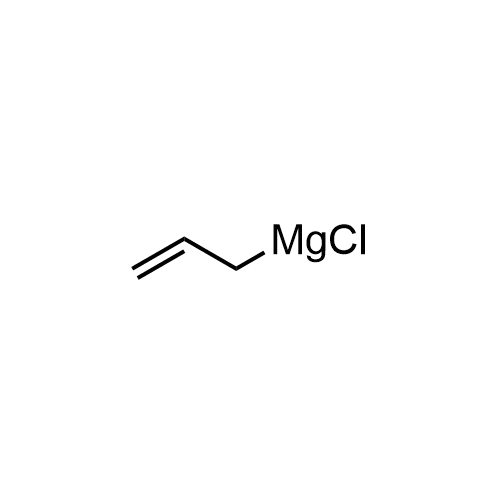
Allylmagnesium Chloride, typ. 18 % solution in THF (typ. 1.7 M)
C3H5ClMg (H2C=CH-CH2-MgCl)
Allylmagnesium Chloride (CAS 2622-05-1) is an organomagnesium compound (Grignard reagent) with molecular formula C3H5ClMg. It is supplied as a typical 18% solution in THF.
In organic synthesis it is used in Grignard-type reactions as a reactive carbon nucleophile.
Allylmagnesium Chloride reacts readily with moisture and oxygen and should be handled under dry, inert conditions. Consult the SDS and site-specific procedures for compatible materials, fire response, and storage.
Applications
Grignard-reactions: reagent for the introduction of the allyl group.
Specifications
- Allylmagnesium chloride: 17,0 – 19,0 %
Method of Analysis
Acidimetric titration of the hydrolized product for the determination of assay as total base. Detailed description available on request.Handling Instructions
The material should only be handled under inert gas atmosphere. Vapors may form explosive mixtures with air. Vapors are heavier than air and may spread along floors. Flash back possible over considerable distance. Use only explosion-proof equipment. Protect from frost, heat and sunlight. Never add water, acids or oxidizing materials. In case of fire use dry extinguishers based on sodium chloride or limestone powder, never use water or CO2. Pay attention to the Safety Data Sheet - Section 7.
Storage Instructions
When stored according to SDS the material is fairly stable. We still recommend to retest the material 6 month after date of analysis if included on CoA. If not included, use the date of manufacturing for the calculation. As material tends to crystallize at lower temperatures, it should be stored above 15 °C.
Legal Disclaimer
The information presented herein is believed to be accurate and reliable but is presented without guarantee or responsibility on the part of Albemarle Corporation and its subsidiaries and affiliates. It is the responsibility of the user to comply with all applicable laws and regulations and to provide for a safe workplace. The user should consider any health or safety hazards or information contained herein only as a guide and should take those precautions which are necessary or prudent to instruct employees and to develop work practice procedures in order to promote a safe work environment. Further, nothing contained herein shall be taken as an inducement or recommendation to manufacture or use any of the herein materials or processes in violation of existing or future patent.