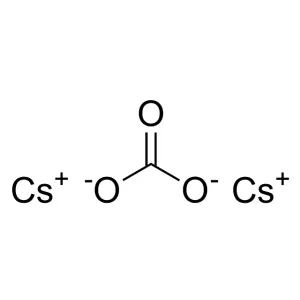
Cesium Carbonate, purity min. 99.9 %
Cs2CO3
Cesium Carbonate, purity min. 99.9 % (CAS 534-17-8, molecular formula Cs2CO3) is an inorganic chemical supplied as a technical-grade material. It is typically a white colourless solid.
Cesium carbonate is a versatile base in organic synthesis.
Typical specifications include: PURITY min. 99.9 %; Li max. 5 ppm; Na max. 100 ppm.
Handling in moist air should be avoided. Contact with skin and eyes or ingestion will cause serious caustic burns.
Applications
Cesium carbonate is a versatile base in organic synthesis.
Specifications
- Li max. 5 ppm
- Na max. 100 ppm
- K max. 200 ppm
- Rb max. 200 ppm
- Ca max. 5 ppm
- Mg max. 2 ppm
- Ba max. 30 ppm
- Sr max. 5 ppm
Handling Instructions
Handling in moist air should be avoided. Contact with skin and eyes or ingestion will cause serious caustic burns.
Storage Instructions
Because of its hygroscopicity cesium carbonate should be stored in tightly closed containers.
Legal Disclaimer
The information presented herein is believed to be accurate and reliable but is presented without guarantee or responsibility on the part of Albemarle Corporation and its subsidiaries and affiliates. It is the responsibility of the user to comply with all applicable laws and regulations and to provide for a safe workplace. The user should consider any health or safety hazards or information contained herein only as a guide and should take those precautions which are necessary or prudent to instruct employees and to develop work practice procedures in order to promote a safe work environment. Further, nothing contained herein shall be taken as an inducement or recommendation to manufacture or use any of the herein materials or processes in violation of existing or future patent.